

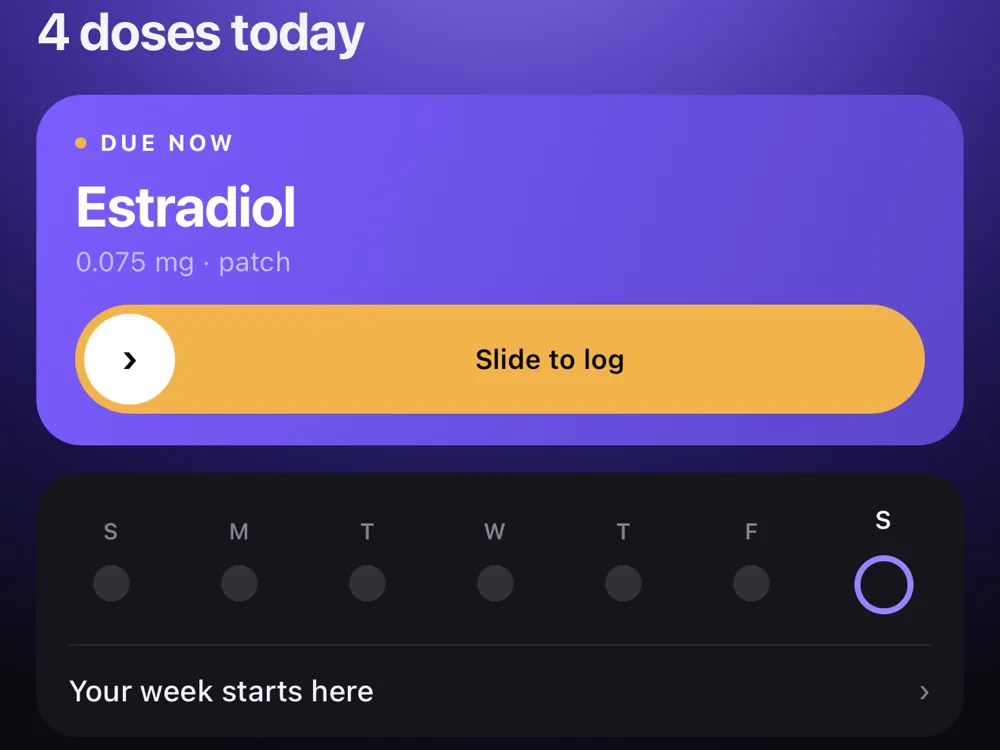
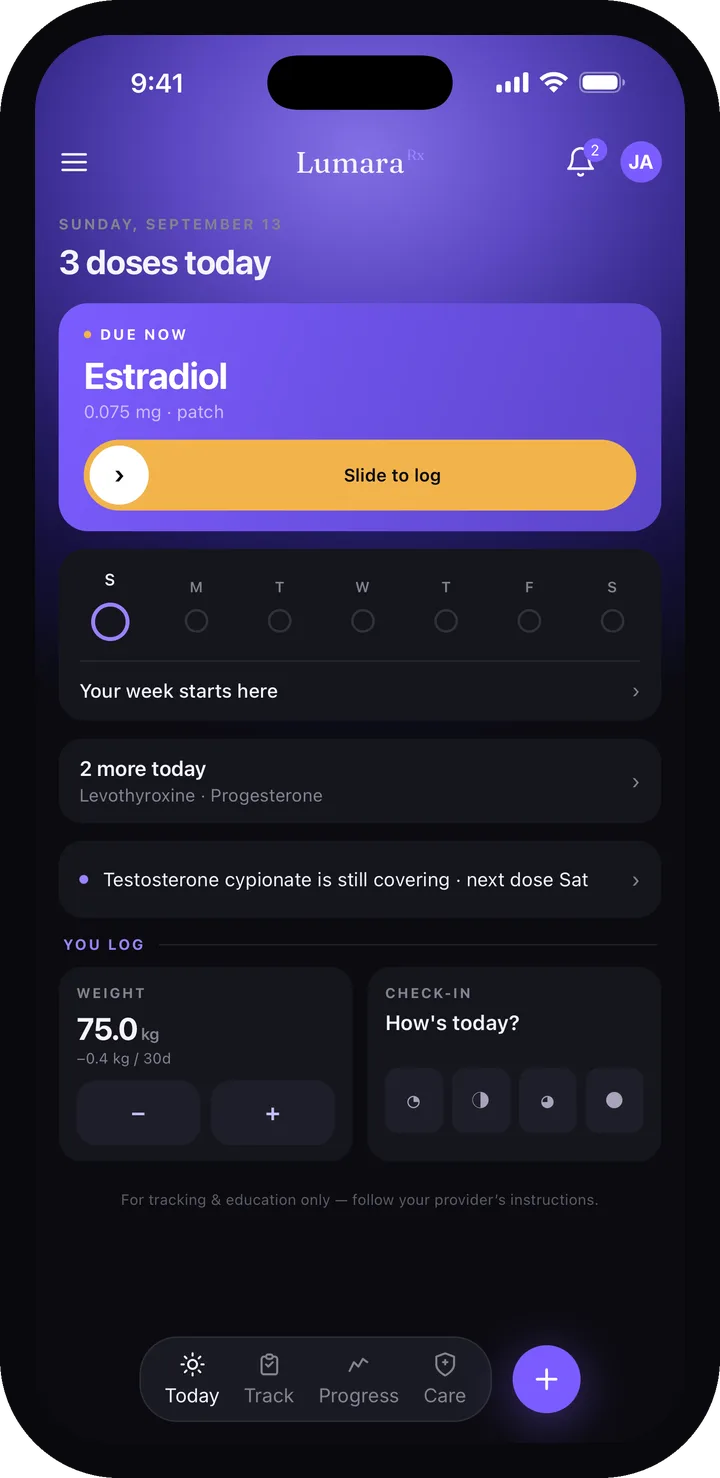
Today, and what's due
The day's doses in one list, logged with a slide, and the week behind you — taken, missed and skipped.
Testosterone, estradiol, progesterone, thyroid — injected, patched, gelled or swallowed. Lumara keeps every dose, symptom, lab result and night of sleep on one timeline, so the question your next appointment turns on already has an answer.
Scan to install
7-day trial, no card. iPhone and Android. No ads, no data sale, ever.
Hormone therapy is judged on a timescale memory is bad at. The change you are waiting for arrives over weeks, your bloodwork arrives every few months, and by the time someone asks how the last twelve weeks went, you are reconstructing them from a feeling. Meanwhile the details that would actually answer the question — which day the dose landed, how far from it you were when the blood was drawn, what your sleep did in between — are the ones nobody writes down. Lumara writes them down.
Free, no card. Your trial starts inside the app.
Pick what you take and how often — weekly, twice-weekly, every few days, daily. Reminders set themselves up.
Check in on how you feel, add your labs when they come back, and connect Apple Health or Health Connect for sleep and HRV.
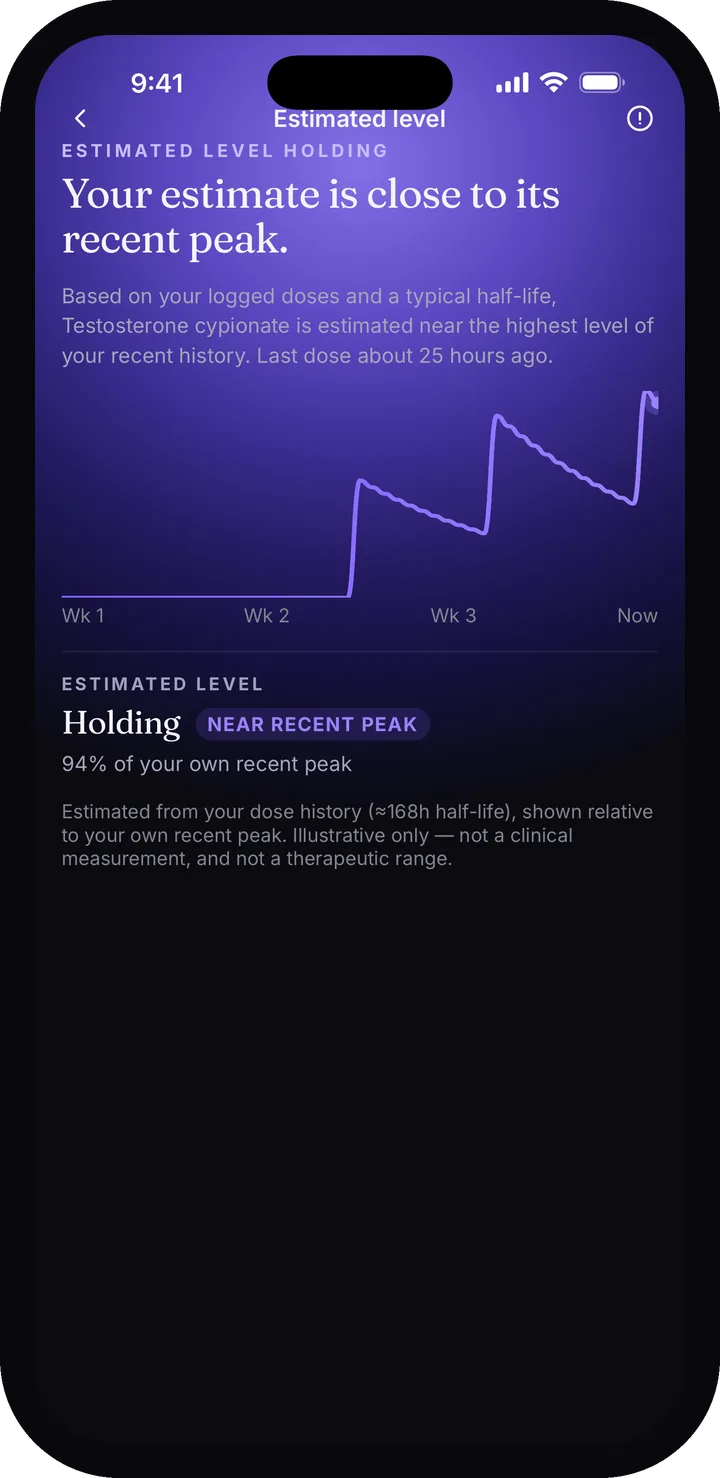
From the doses you logged and the published half-life of what you take, Lumara estimates what is still circulating and charts it day by day. That curve is what turns two otherwise floating data points — a flat Thursday, a panel drawn on a Tuesday morning — into things with a position on a timeline, instead of things you try to reconstruct out loud at an appointment.
A model, not a measurement. This is an approximation from your own dose history — it is not a blood test, carries no clinical units, and is never a recommendation. Only your provider can interpret your actual levels.
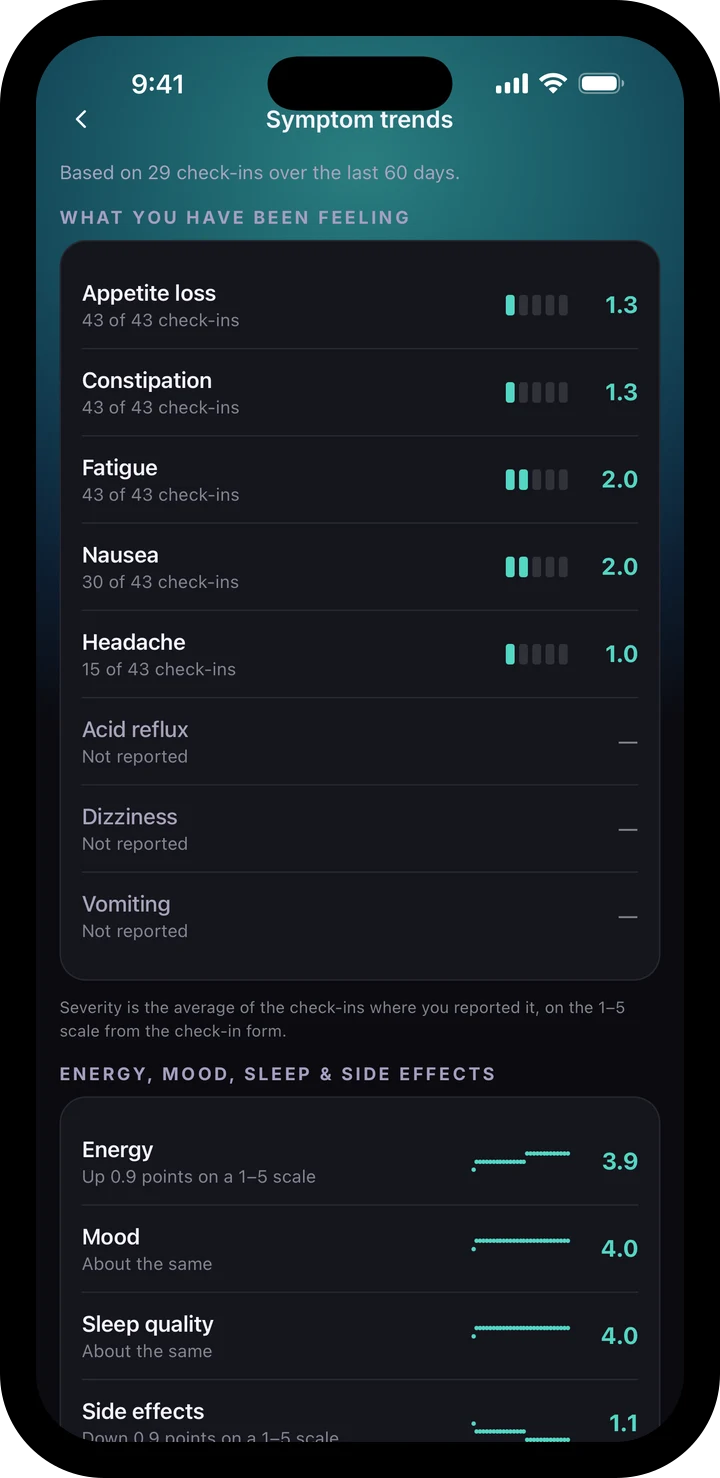
The reasons people start hormone therapy — energy, sleep, mood, hot flushes, brain fog, libido — are the hardest things to recall accurately eight weeks later, and they are exactly what the next appointment turns on. Lumara takes them as quick check-ins on a fixed scale, and reads sleep, HRV and resting heart rate from Apple Health or Health Connect, so most of the record builds itself.
The reminding, the logging, the remembering and the paperwork — in one place, on iPhone and Android.

The day's doses in one list, logged with a slide, and the week behind you — taken, missed and skipped.

A nudge at the time you set for every dose, plus refill, expiry and lab reminders. Scheduled on the phone, so they arrive with no signal.

Rate energy, mood, sleep and side effects on a 1–5 scale and tag any symptoms. Ten seconds a day is what makes a trend.

Log a weigh-in and how you have been feeling, with a daily or weekly reminder to do it. Both land on the same timeline as your doses.

Every dose taken and missed, day by day and medicine by medicine, with your weight and check-in trends over the same weeks.


Connect once and Lumara reads what your phone, watch or scale already writes. Read-only, on iPhone and Android — nothing is written back.
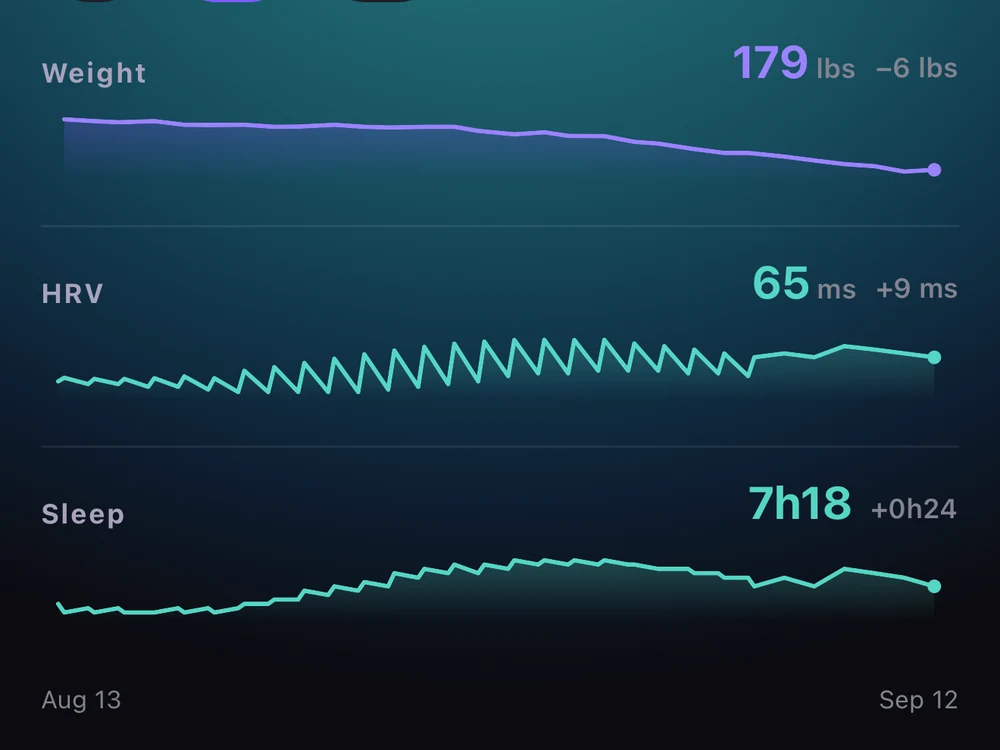
HRV, resting heart rate, sleep, steps and weight, charted alongside your dose history over the same weeks.

A modelled curve of how much is likely still in you between doses, drawn from the schedule you logged. On the paid plans.
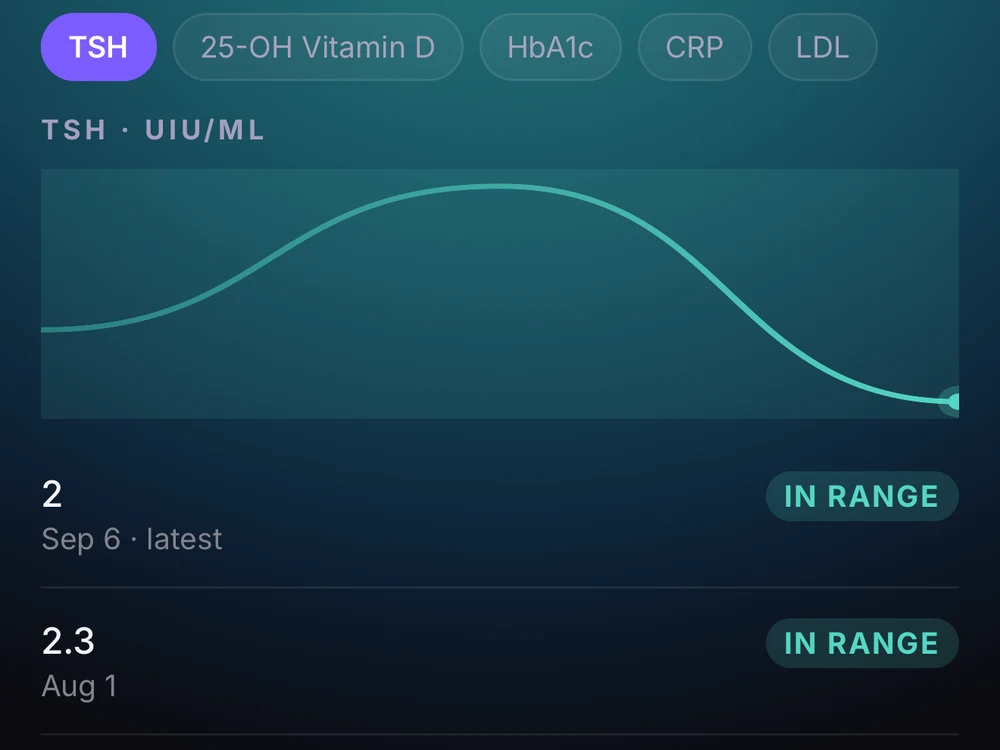
Enter a marker, its value and the draw date, and Lumara charts it against the reference range. Set your own reminder for the next one.
A model, not a measurement. This is an approximation from your own dose history — it is not a blood test, carries no clinical units, and is never a recommendation. Only your provider can interpret your actual levels.

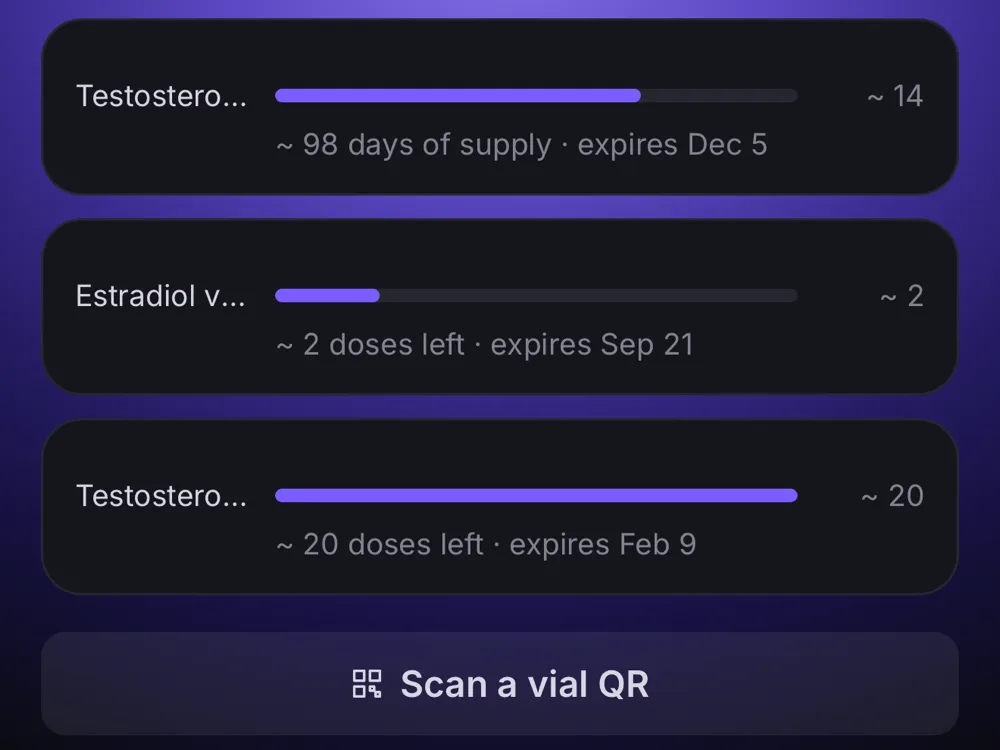
Refill dates with a reminder while there is still time to reorder, and a vial vault holding days of supply and expiry dates.

Add a trip with its destination and dates and your daily reminders follow local time there. Weekly injectables keep their home interval.

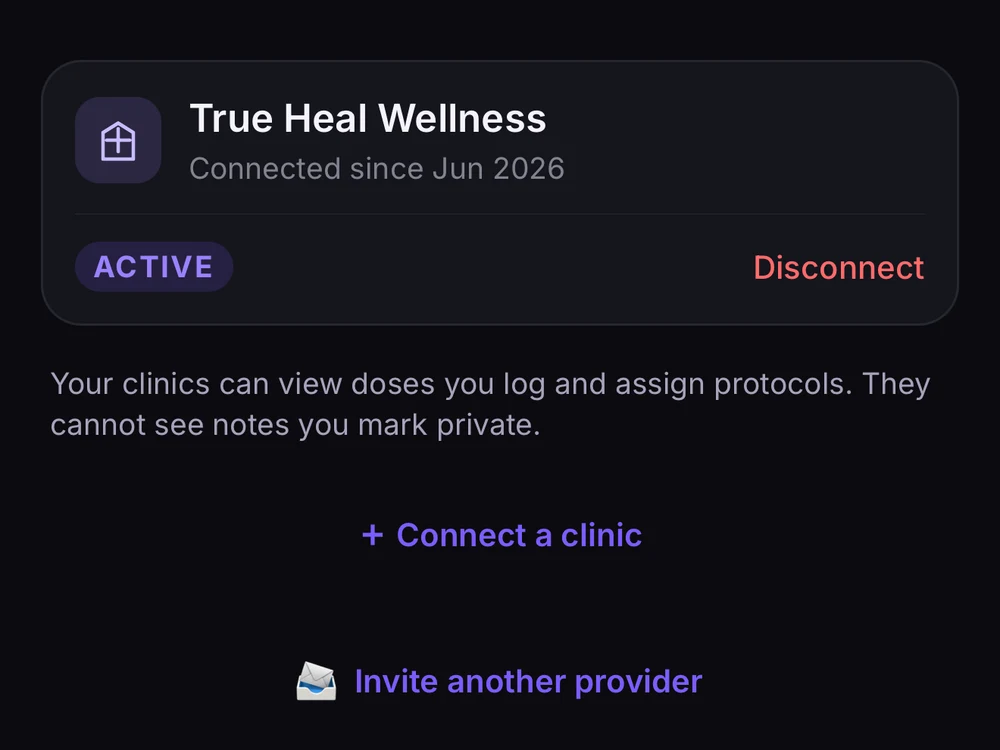
If your clinic uses Lumara, enter their join code and the protocol they prescribe arrives in your app. You start the connection and you can end it.

Lumara writes up the month — what you are on, how much of it you took, your weight and your worst symptoms — to take in with you.
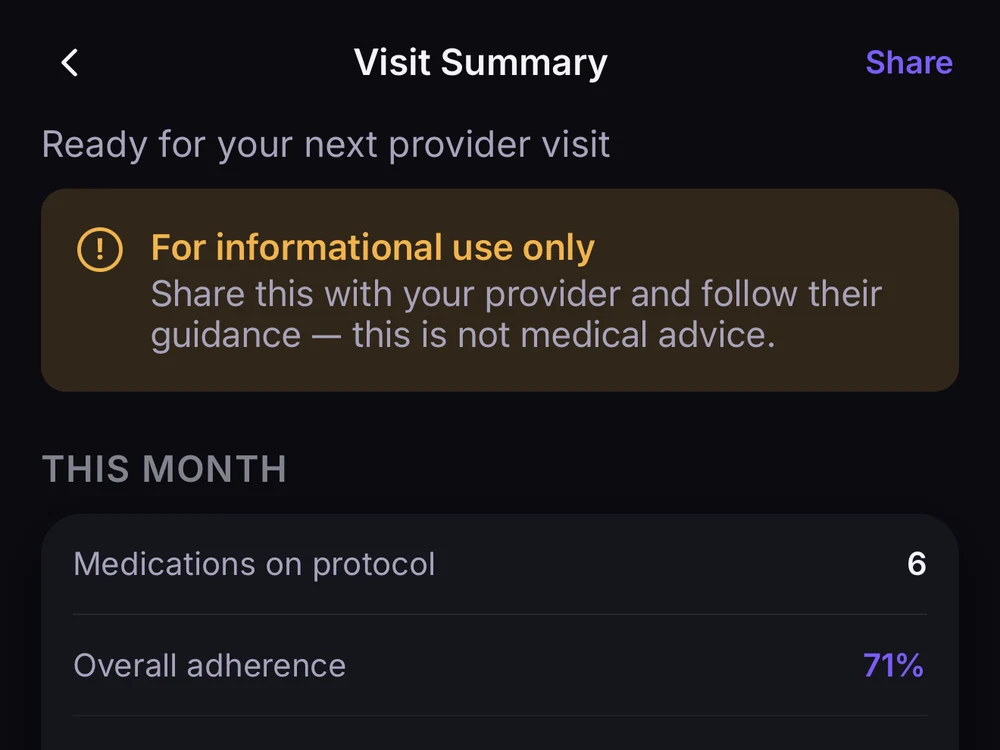
Turn what you have logged into a factual summary and share it in a tap. Messages and protocol updates from your clinic arrive in the same app, to read.

Stored on your device, with encrypted backup only if you turn it on. Face ID or a passcode locks it, there are no ads, we never sell your data, and you can export or delete it whenever.
Vial tracking, circulating-level charts and the provider report are on the paid plans.
A hormone level is a measurement of one moment, and the moment is not interchangeable. An injected ester rises after the shot and falls before the next one is due; a patch or gel tracks the day it is worn; an oral dose tracks the hours since it was swallowed. This is ordinary pharmacology, and it is the reason prescribing information specifies when a sample should be taken and not only what to measure. Lumara records when each dose happened and when each sample was drawn, so the two stay attached to each other. It does not interpret the result, describe it as high or low, or suggest a change.
Observational only. Lumara shows what moved and when. It does not attribute a change to your therapy, judge a lab result, or suggest altering a dose — that is your prescriber's work. Lumara's job is to make sure they get the whole picture.
Product information as of 5 September 2026.

Lumara is built for it. Your therapy gets its own schedule and reminders, an estimated levels curve between doses, symptom check-ins and a place for your lab panels — testosterone, estradiol, progesterone or thyroid, plus anything else you take alongside them, in one record rather than four.
All of them. A twice-weekly injection, a daily patch, a pump of gel and a nightly capsule each keep their own schedule and their own reminders, and each is charted on its own rhythm rather than forced into a weekly one. Injection-site rotation is there for anyone who injects and stays out of the way for anyone who does not.
Into the same timeline as your doses. Log a panel when it comes back and it keeps the weeks either side of it, including how long after your last dose the sample was taken — so a result arrives with its context instead of as a number in an inbox. Export the whole history as a CSV or a provider-ready summary whenever you need it.
No, and it is built not to. Lumara shows what you took, what it estimates is still circulating, and what your symptoms, labs and biometrics did around it. It does not judge a result, flag a number as high or low, or suggest changing a dose. That reading belongs to your prescriber; Lumara exists to make sure they get the whole picture.
Yes, and it is written for both. Estradiol, progesterone, testosterone and thyroid all work the same way here — their own schedule, their own curve, their own check-ins — and the symptoms you track are yours to choose, so the screen you look at every day is about your therapy rather than somebody else's.
Your data is encrypted on your device, backups are encrypted, and we never sell data or show ads. Export or delete everything from inside the app.
No. Lumara is a tracking and education tool. It doesn't prescribe, diagnose, or replace your provider's guidance.
Set your therapy up in about two minutes. 7-day trial, iPhone and Android, no ads — ever.
Scan to install
Free to download. No ads, no data sale, ever.
Lumara is a tracking and education tool. It is not a medical device and does not provide medical advice, diagnosis, or treatment. Always follow your provider's instructions.